
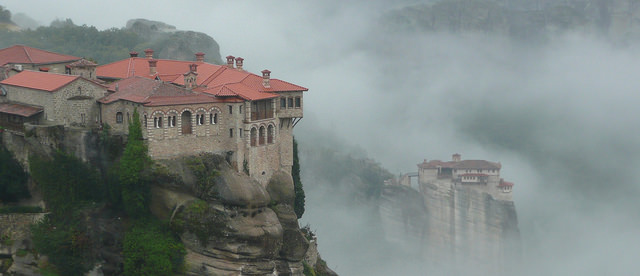
Perched on the peaks of towering sandstone rock pillars fashioned millions of years ago stand the monasteries of Meteora, most of that were made during the Middle Ages. The Greek word meteora means that “suspended in the air,” and this phrase aptly describes these outstanding Greek Orthodox monasteries. As one of the most spectacular sights in Greece, the Meteora monasteries not only offer incredible views of the surrounding landscape but a unique perspective of medieval monastic life as well. Check out the awe-inspiring monasteries in Meteora.
St. Nicholas Anapausas Monastery
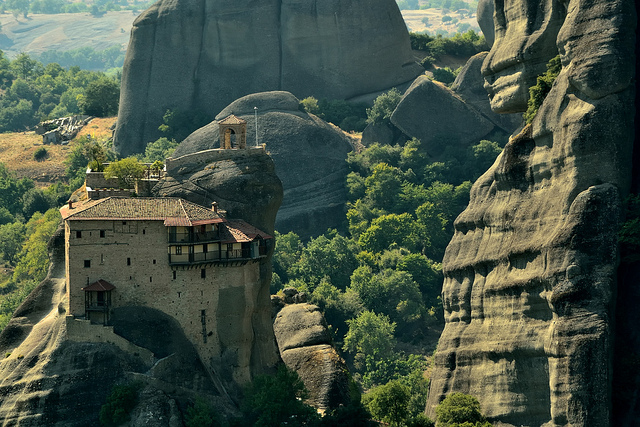 The comparatively small Holy Monastery of St. Nicholas Anapausas is usually unmarked throughout tours of the monasteries, however the simply accessible advanced is definitely worth a visit. The 14th-century monastery boasts a number of the best frescoes in Meteora. The renowned European painter Theophanis Strelitzas adorned the most chapel with spirited illustrations of Biblical scenes as well as depictions of 16th-century monastic life. The road from Kastraki takes guests to the base of the peak where 150 steps lead to the monastery entrance.
Rousanou Monastery
Lower in elevation than the other six major monasteries in Meteora, the Holy Monastery of Rousanou is one of the easiest to access, and a newly restored bridge makes the trek over its sheer cliff walls considerably less frightening too. Founded in the 16th century, the monastery became a nunnery in 1988. The friendly nuns who greet visitors at the door stand in stark contrast to the gruesome scenes of martyrdom depicted in the main chapel’s well-preserved frescoes. The pretty courtyards and gardens outside are much more cheerful, and they provide the perfect backdrop for picture-taking.
St. Stephen Monastery
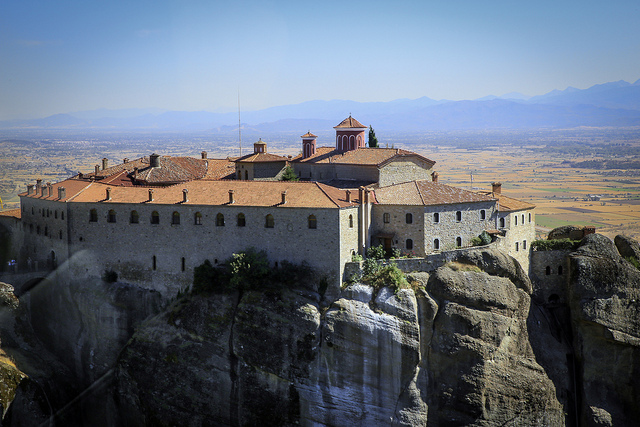 The only monastery in Meteora visible from Kalambaka, the Holy monastery of St. Stephen has been an area of journey since the fourteenth century once Byzantine emperor Andronicus Paleologos visited and later on funded the original church. Built the 1500s, the current church features the skull of St. Charalambos, that is believed to own miraculous healing powers. The monastery suffered abundant damage within the 20th century: it had been bombed in World War II by the Germans whereas most of the frescoes were damaged by Communist rebels throughout the Greek Civil War. St. Stephen’s was nearly abandoned till 1961, once it became a convent. The 15th-century refectory has been converted into a museum that displays finely embroidered robes and tapestries. The cloister is definitely reached by a bridge from the most road. The nuns welcome guests and generally provide their handmade embroideries available.
These are the Awe-inspiring Monasteries in Meteora one must visit at least once in their life time.
Image by Carlos Pinto 73,psyberartist,Paul Stephenson Under Creative Common License.


What do you think?