

I love the idea of a Paris day trip. In practice, the part that makes people hesitate is rarely the destination. It’s the train logistics. Which station? Which ticket? Do you need to “validate” something? Why does the same line split into multiple branches? And why does everyone around you look like they already know what they’re doing?
This guide is Cluster 1 in the series: it’s the practical companion to the pillar article on best day trips from Paris. If you already know you want Versailles or Reims, this post is your calm checklist so the day feels like a vacation, not a scavenger hunt.
One quick note before we get into it: Paris transport rules evolve, and you’ll see old advice floating around. For example, from January 2025, Île-de-France introduced simplified fares for occasional travellers, including a single-price metro-train-RER ticket (airports excluded) and a separate bus-tram ticket. That change alone makes some older “buy an origin-destination ticket” instructions feel a bit dated.
How Paris train day trips actually work
Most day trips from Paris fall into two buckets:
- Paris region trips (Île-de-France): You’ll often use the RER or Transilien commuter trains. Think Versailles, Fontainebleau, Provins, Chantilly.
- Beyond the Paris region: You’ll usually use TER or TGV services depending on the route. Think Reims (often fast trains), Normandy cities, and longer “big swing” destinations.
In real life, the “which bucket is this?” question matters because it changes where you buy tickets, how you validate, and what kind of flexibility you have if you miss a train.
If you’re still choosing where to go, jump back to best day trips from Paris and pick one destination first. Planning is much easier when you’re not planning five different hypothetical days at once.
Start with the right station (this saves more time than you’d think)
Paris doesn’t have one central station. It has several major stations, and day trips naturally “belong” to different ones. This is the part people skip… and then they end up crossing the city at rush hour for no reason.
As a loose guide:
- Gare de l’Est: Great for eastern routes like Reims.
- Gare Saint-Lazare: Often useful for Normandy-bound routes and western day trips.
- Gare de Lyon: Common for south/southeast routes and Fontainebleau area trains.
- Gare du Nord: Often used for northern routes (and international trains).
- Gare Montparnasse: More west/southwest routes.
And then there’s the RER, which cuts through the city with its own rhythm. For Versailles specifically, the Palace’s own practical information notes that RER line C goes to Versailles Château–Rive Gauche, about a 10-minute walk to the Palace. That’s the kind of detail you want to confirm before you leave your hotel, not while you’re already on a platform.
Tickets, fares, and what to buy (without overthinking it)
This is where people spiral a little. You don’t need to become a transport expert. You just need to know what kind of journey you’re taking and buy the right single ticket or pass.
Metro-Train-RER ticket (the “simple” one for many day trips)
Île-de-France Mobilités describes the Metro-Train-RER ticket as a single ticket for metro, train, and RER journeys in or outside Paris, with a defined perimeter and exclusions (notably airports and high-speed lines). It also states the ticket allows connections for up to two hours from entry validation, without exiting.
That matters for day trips because it reduces the classic confusion of “Do I need a t+ ticket or something else?” If your day trip is within Île-de-France and uses metro + RER/train connections, this is often the cleanest option for occasional travellers.
Two things to watch:
- Airports are a special case: Don’t assume your day-trip ticket works to Orly or CDG.
- TGV is a special case: The Metro-Train-RER ticket does not cover high-speed lines.
If you want a deeper “which ticket for which situation” breakdown—especially if you’re travelling as a family, using Navigo Easy, or trying to keep things phone-based—this fits naturally with day trips from Paris without a car, because the whole point is removing friction.
What changed in 2025 (and why older advice can be confusing)
Service-Public.fr (French government information) explains that from 1 January 2025, occasional travellers in Île-de-France can buy two single-price tickets: a metro-train-RER ticket and a bus-tram ticket, with airports excluded and connection time limits spelled out. It also notes that tickets purchased before 1 January 2025 remain valid until 31 December 2025 under the previous rules.
If you read an older blog telling you to buy a specific legacy ticket type, don’t panic. Just anchor yourself in the current ticket names you see on official vending machines or apps, and match them to the mode you’re using: rail ticket for rail, bus-tram ticket for bus/tram.
When you’ll need a separate SNCF ticket
If you’re taking a longer regional or high-speed service beyond the Paris commuter network—think Reims on fast trains, for example—you’ll typically buy a point-to-point SNCF ticket for that specific train or route. The “simple” Paris-region ticketing won’t cover TGV services.
As a planning habit, I like this rule: if your day trip includes a seat reservation or looks like a long-distance service in the booking flow, treat it like a separate rail ticket situation and plan a little more carefully.
Validation, barriers, and the small things that trip people up
Some Paris and Paris-region stations have gates; others feel more open. Either way, the main principle is consistent: validate your ticket or pass when you enter the network, and keep it accessible for inspection.
Île-de-France Mobilités notes that the Metro-Train-RER ticket is valid for two hours from entry validation (without exiting), which is a subtle but important detail: if you leave the system, you usually can’t re-enter on the same validation window and pretend it’s still one continuous journey.
And yes—people do get checked. Not aggressively, but routinely. The “I’ll sort it out later” approach is rarely worth the stress.
RER vs. train vs. TGV (a gentle translation)
If you’ve never used Paris rail before, the naming can feel like alphabet soup. Here’s the plain-English version:
- Metro: City transport, frequent stops, great for getting to stations and around Paris.
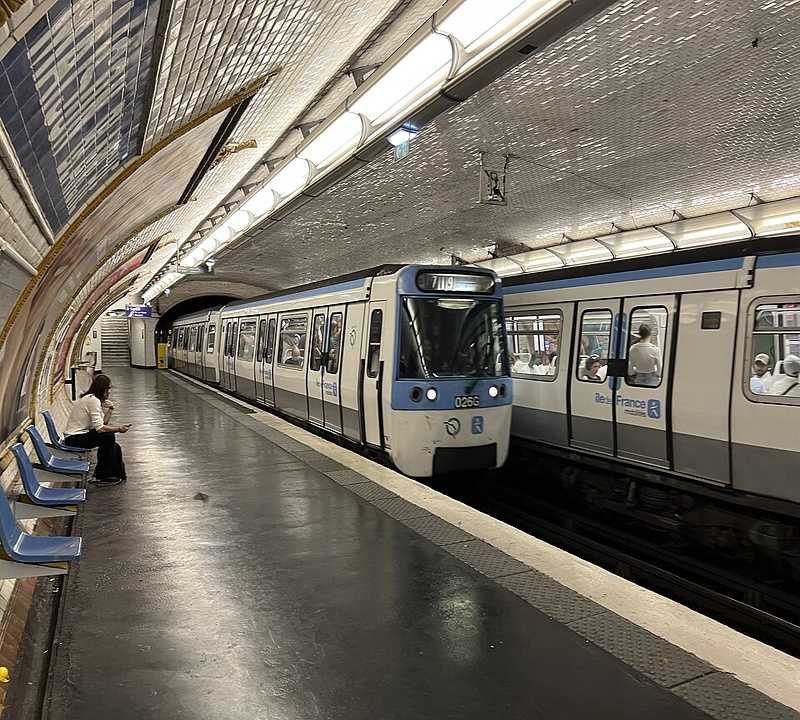
- RER: Faster suburban rail that cuts through Paris and reaches the suburbs (Versailles is a classic use case).
- “Train” in Île-de-France: Similar commuter-style services that overlap with RER-style day trips.
- TER: Regional trains beyond the immediate Paris commuter system.
- TGV: High-speed trains, usually not covered by local Paris-region single tickets.
This isn’t meant to be perfect. It’s meant to keep you from buying the wrong thing and standing on the platform with that sinking feeling.
A realistic day-trip morning routine (so you don’t start frazzled)
This is my preferred approach, and it’s boring in the best way:
- Check the departure station and the rough timing the night before.
- Leave your accommodation earlier than you think you need to.
- Arrive at the station with enough time to find the platform and still use the restroom.
- Validate at the start of the journey and keep your ticket/pass handy.
- Take a screenshot of your return plan (or note the last practical train back).
You can be spontaneous once you arrive. The “spontaneous” part is much more fun when the foundations are solid.

Common route examples (so this feels concrete)
Versailles (the classic first day trip)
Versailles is the day trip that convinces people they can do this whole “train travel in France” thing. As mentioned earlier, the Palace’s official practical information highlights RER line C to Versailles Château–Rive Gauche, then about a 10-minute walk to the Palace.
The only awkward part is that RER lines can branch, so you do want to double-check the direction and destination display before you board. It’s not hard, but it’s the kind of detail you’re happier confirming while you’re still calm.
Reims (Champagne day)
Reims is a great example of a day trip that feels fancy but is logistically straightforward: you’re generally thinking “mainline station, booked rail ticket, and then walk/taxi within the city.” If you want to plan Reims with a seasonal lens—because daylight hours and weather change the feel of the day—linking your planning to best day trips from Paris by season can help you choose the right month for that long, relaxed lunch.
Should you book ahead?
It depends, which is an annoying answer, but it’s the truth.
- Book ahead when: you need a timed entry (popular attractions), you’re travelling on a peak day, or you’re taking a service that’s reservation-based.
- Wing it when: the destination is close, you have frequent departures, and your main goal is wandering rather than a specific timed activity.
If you’re planning a “soft day,” overbooking can make it weirdly stressful. If you’re planning a “hard day,” not booking can blow up the schedule. There’s a sweet spot in the middle, and it’s different for every traveller.
Troubleshooting (because something always happens)
A few common problems and what I’d do:
- You can’t find your platform: Look for the big departures board first, not the small signs. Stations are designed around those boards.
- You’re not sure you bought the right ticket: Ask at the ticket window before you pass through gates or board; it’s much easier to fix early.
- You missed the train: For frequent commuter-style departures, you usually just take the next one. For reservation-based trains, you may need a new ticket. Check the conditions on your booking.
- You’re unsure about connections: Remember the two-hour connection rule for the Metro-Train-RER ticket and avoid exiting the system mid-connection if you can.
And if you find yourself thinking “maybe I should just do a guided tour,” that’s not a failure. Some people love logistics. Some people would rather outsource them. The pillar guide on best day trips from Paris includes both types of options because, frankly, both types of traveller exist in the real world.
Conclusion
Most day trips from Paris by train are genuinely easy once you know the three building blocks: the right station, the right ticket type, and a small buffer of time. After that, the day is yours.
If you haven’t picked a destination yet, start with best day trips from Paris. If you already know you’re doing public transport-only routes, day trips from Paris without a car is a good next click. And if you’re choosing based on daylight and seasons, best day trips from Paris by season keeps expectations realistic.